
Published August 8, 2025 Reliable Refugee Storytellers Association (RRSA)
Author: RRSA >Training summary by Romeo
Reading time: 5 minutes
Practical lessons from the RRSA storytelling training: how to craft short, ethical, high-impact stories using simple tools. Includes day by day training highlights, exercises, and publishing tips.
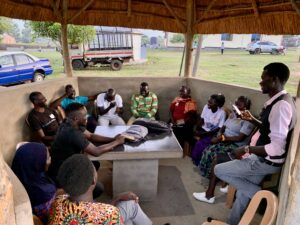
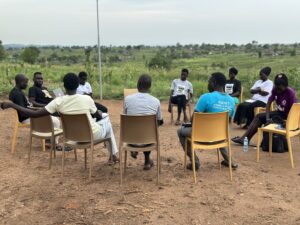
Participants practice storytelling exercises during the RRSA training.
Storytelling is how communities remember themselves, heal from loss, and ask the world for help. At the Reliable Refugee Storytellers Association (RRSA) training (Romeo ASKnet), participants learned how to turn lived experience into short, powerful stories that protect dignity and move audiences. This post gathers the most useful lessons, hands-on exercises, and publishing tips from the training so you can start telling stories that matter today.
What RRSA taught (training highlights)
From the training curriculum (Romeo ASKnet) we emphasized practical skills and ethics. Here are the key takeaways:
Use a single incident. Short pieces should center on one meaningful moment.
Hook quickly. Start with a sensory detail or line of dialogue in the first 5–10 seconds.
Show, don’t tell. Use images and short scenes rather than long exposition.
Edit ruthlessly. Cut anything that doesn’t serve the arc.
Center consent and safety. Get informed consent, offer review of edits, and remove identifying details if needed.
Low-cost tools work. A smartphone, a simple mic, and free editing apps (CapCut, Audacity) suffice to produce strong stories.
Day by day training summary (from the curriculum)
You can use this mini-curriculum to run your own workshop.
Day 1 — The Heart of Storytelling
Story elements (character, scene, conflict, arc)
Story circles: 2-minute memories + peer feedback
Story arc templates and planning worksheets
Day 2 — Ethical & Responsible Storytelling
Informed consent basics (verbal & written)
Power, dignity, and privacy: avoiding re-traumatization
Group-created ethics checklist
Day 3 — Multimedia Story Creation
Storyboarding (Canva or paper templates)
Recording basics: framing, natural light, clear audio
Produce a 2–3 minute draft
Day 4 — Interview Techniques & Editing
Asking open questions that reveal detail
Editing workshop: rhythm, trimming, natural sound
Peer review and revision
Day 5 — Publishing & Advocacy
Distribution: social media, podcasts, community screenings
Pairing stories with calls to action for fundraising and advocacy
Final showcase and facilitator feedback
Step-by-step: craft a 2–3 minute story
Pick one moment. Narrow your focus to one clear incident.
Hook with a sensory image. Sound, smell, or a line of dialogue.
Introduce the person quickly. Who are they and what do they want?
Show the conflict. Use 2–3 short images or lines.
Close with change. A feeling, a decision, or a small visible outcome.
Polish. Trim pauses, repetitions, and anything that slows the pace.
Interview prompts that produce detail
“Tell me about the first time you noticed this.”
“What did you see, hear, or smell?”
“Who else was there and what did they do?”
“How did you feel right after?”
“What small thing gave you hope?”
Follow up gently: “Can you slow down and tell that part again?”
Low-budget production tips
Recording: place the phone 20–30 cm from the speaker; choose a quiet spot; stay steady.
Lighting: use natural light from a window; avoid backlight that silhouettes faces.
Sound: use a simple lavalier or hold the phone close; record ambient sound for atmosphere.
Editing: keep to 2–3 minutes, preserve the hook and the close, add a subtle ambient bed if needed (with permission).
Free tools to start: Audacity (audio), CapCut / InShot (mobile video), Canva (storyboards & thumbnails).
Ethics & consent quick checklist
Before recording: explain purpose, obtain consent, offer to review, ask about sensitive details.
Before publishing: share the final edit, confirm attribution preferences (name/anonymity), mask details if safety is an issue.
Ethics are not optional they protect storytellers and build community trust.
Example (model micro-story)
“When the rain came, I held my baby and counted each drop on the tin. A neighbor came with a plastic sheet and said, ‘We will not let you sleep in the water.’ After that night I knew we were not alone.”
— sensory hook → conflict → turning moment → emotional close
Use this structure as your template: sensory opener → conflict → small turning point → emotional end.
Want to learn with us?
If RRSA can run a workshop with your group or share templates (story arc, consent form, storyboard), email info@reliablerefugeesa.org Try this starter exercise with your team: each person records a two-minute memory about “the smell of my childhood home.” Share and give 2 minutes of feedback per storyteller.